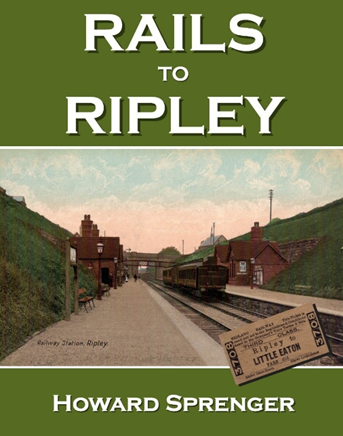
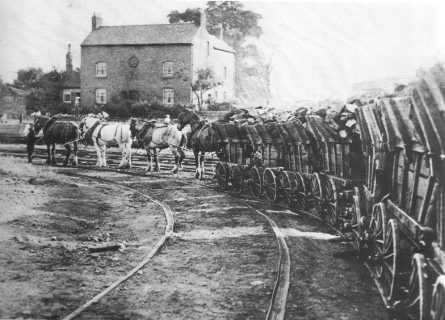
The first passenger line to Ripley was not built until the 1850s, but that doesn’t mean that railways were not common in the area. In the 18th century or possibly even earlier, wooden tramlines had carried coal from the pits in wagons pulled by horses. In 1795, Benjamin Outram built the 6 ¾ mile plateway, or gangroad from Ripley to the Derby Canal at Little Eaton which didn’t close until 1908.
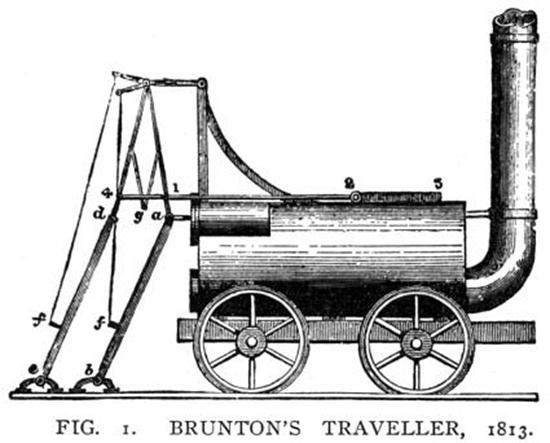
The first steam engine to operate in the area was Brunton’s “Traveller” or “Mechanical Horse” in 1813. The prevailing belief at the time was that iron wheels would not grip on iron rails on a gradient: hence the design of the “Traveller” which used legs to push the locomotive and its load of empty wagons back up the hill from the canal to the Crich limestone quarry.
This was in the same year as “Puffing Billy”, one of the earliest steam engines, was built in the North-East, and predates Stephenson’s “Rocket”. Butterley later built their own steam locomotives for use in their works, probably starting in the early 1830s.Pictured is “Adelaine”.

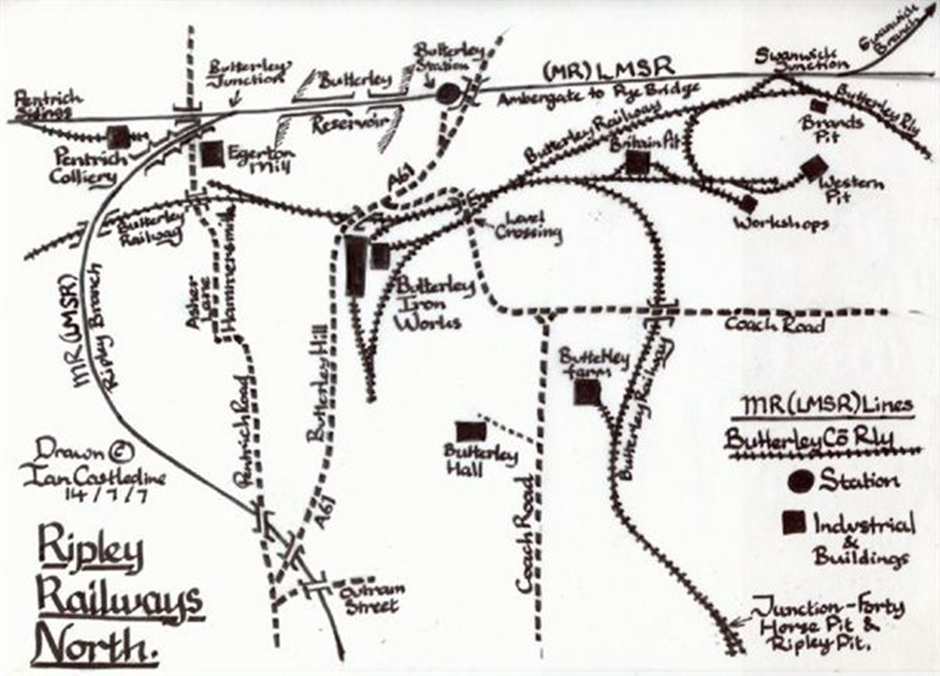
All the Butterley works and mines had railways, as you can see from the map below:
The first passenger line to reach Ripley was the Midland Railway branch line opened in 1856. It left the Derby- Ambergate line at Little Eaton, had stations at Little Eaton, Coxbench, Kilburn and Denby and terminated just South of Steam Mill Lane. This was the first Ripley station, and there was a turntable there to turn the engine around for its journey back to Little Eaton or Derby.
In 1875 the London Midland and Scottish Railway Pye Bridge to Ambergate line opened along the Amber Valley North of Ripley via Butterley. This line linked the two North-South lines, one along the Erewash Valley and the Derby- Chesterfield and Sheffield line.
Finally, in 1890, the navvies moved in to build the line from the Erewash Valley line at Langley Mill via Heanor and Codnor to Ripley and to extend the branch line through Ripley to meet the Pye Bridge to Ambergate line at Butterley junction. In the process they had to dig deep cuttings through the town, and create a new station, also in a cutting, off Nottingham Road.
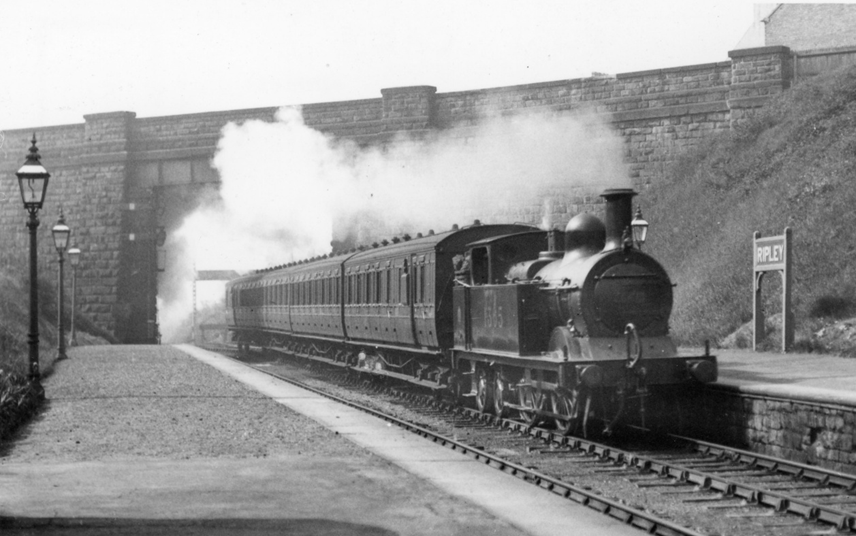
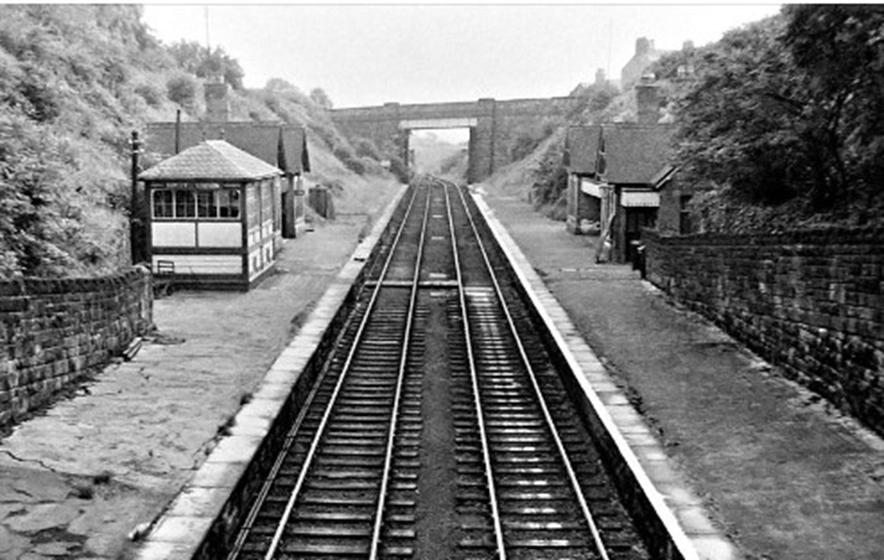
The Langley Mill to Butterley line closed in 1926, but the Little Eaton to Ripley line lasted until 1963, when the station area was taken over by Clowers Builders Merchants, and later used for housing.
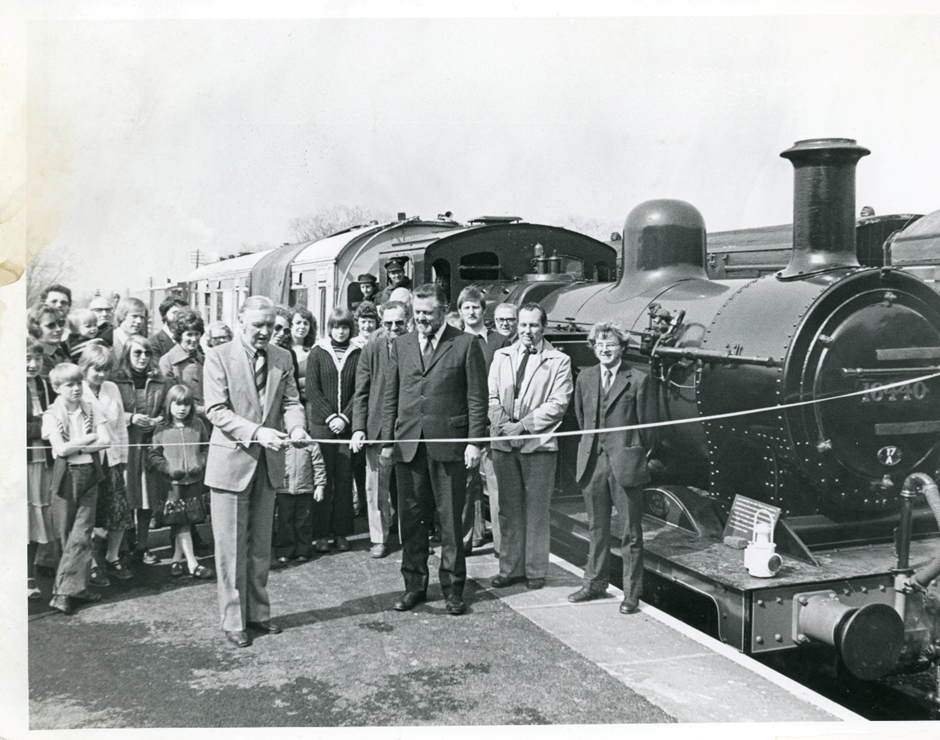
The Pye Bridge to Ambergate line closed in 1964 but the middle section, from the new A38 trunk road to Swanwick Junction and Ironville (with a link to the main Erewash Valley line) was reopened as a heritage railway by the Midland Railway at Butterley in 1981.
This very basic outline is indebted to Howard Sprenger’s book “Rails to Ripley” (Kestrel Railway Books 2009) in which you can find much more detail.