
One of the first large contracts the Butterley Company delivered was for the first iron bridge across the Thames at Vauxhall, opened in 1816. It had nine cast-iron arches of 78ft span and was 36ft wide.

37 boats took the castings along the Erewash canal and the river Trent to Gainsborough where they were transferred to 27 ships to be taken to London. However, when they arrived they were late and the parts were numbered wrongly. William Jessop, who was in London to supervise the erection of the bridge, complained bitterly that the workers at Butterley had not followed his instructions in organising the shipments, and eventually he gave up the contract to erect the bridge and contented himself with getting the reluctant bridge company to pay Butterley for the iron parts.
After this fiasco, he determined that in future, all structures were to be trial erected in the Butterley yard, and the parts clearly and correctly numbered before being dismantled for shipment.
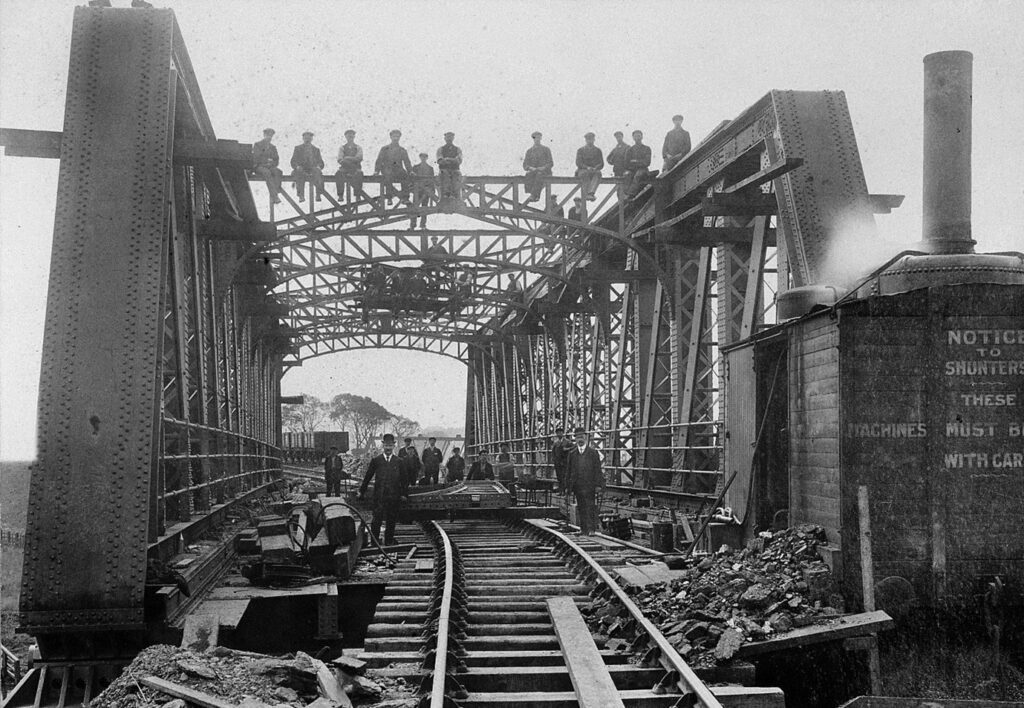
The Company also began the practice of having a group of men who travelled with the parts and erected the structures. Thus it was that Ripley men were responsible for the building of the roof of St Pancras station, for example.

The life of an erector was not easy. The job often involved working at height, with very little safety equipment, and accidents and even deaths did happen. The erectors also had to lodge away from their family, sometimes for months on end; one or two never came back, having set up home with another family where they were working.
It is a tribute to their skill and expertise that there are bridges they built which are still in use after over 100 years. And all the pieces are in the right order.