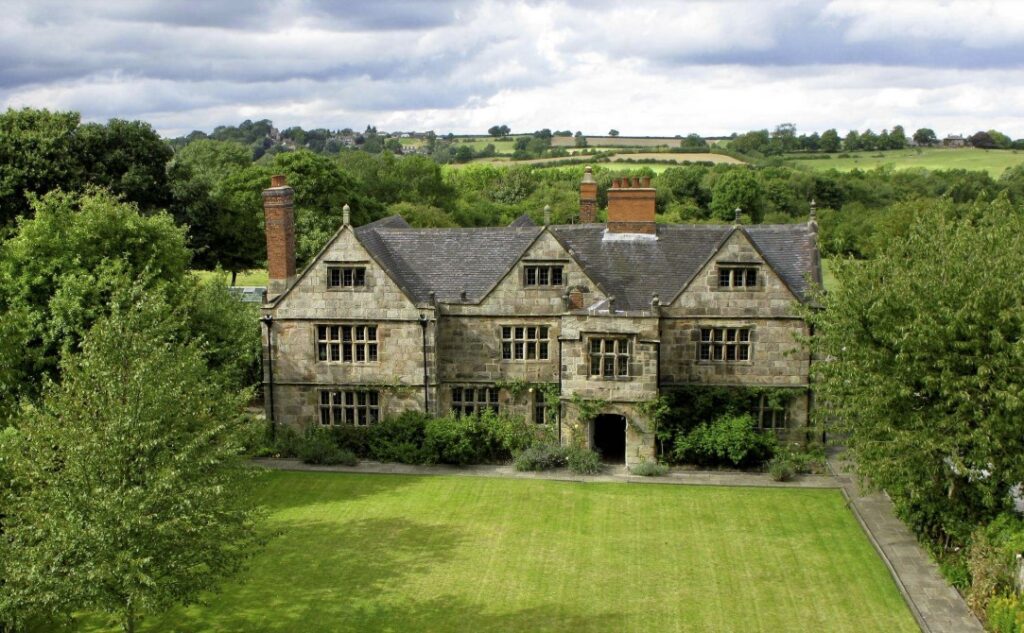
The history of Padley Hall is rather obscure. The Manor of Padley was owned by Darley Abbey, like many others in the area, and there is some indication that a house on the site of Padley Hall was occupied by the le Luy family in the 14th century. Their name was eventually anglicised to Lowes, giving the name to Lowes Hill.
At the dissolution of Darley Abbey in 1538, the land passed to the Zouch family. They rented it out at first.
The present Hall was built in 1614, or thereabouts, probably by the Zouches
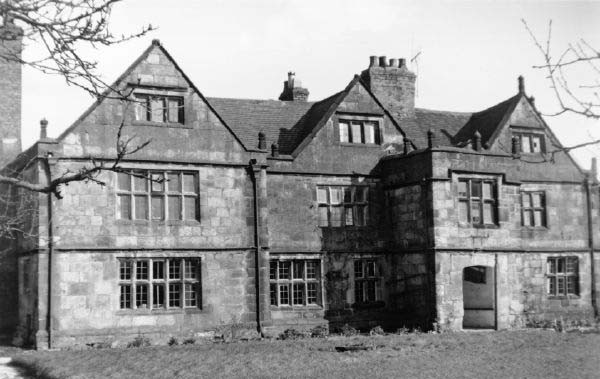
The Zouches sold Padley, in “the reign of James 1” (1603-25) to a Mr Smith, probably the “Isaac Smith of Padley Fields Hall” mentioned in a sale document of 1636. Smith is buying two water mills and a portion of the manor of Ripley from one John Wright.
We know little about Isaac Smith but it seems likely that he was part of the family of Thomas Smith of Derby, a wealthy landowner who had made a pile buying up monastic lands in the city, and who may have known the previous house on the Padley site. He styled himself “gentleman”
For the next 400 years or so, the Hall was often a working farm, rarely a country house, and certainly not associated with any noble family. This might help to explain the lack of historical information about it.
The Hall was reputedly occupied by some Roundhead officers during the siege of Wingfield Manor in 1644. The Smith family probably let the house at some times, since in 1679 there is an account of Robert Fearne of Padley Hall, a quaker, being imprisoned for not paying a tithe of one shilling and sixpence. Quakers did not recognise the role of priests, which the tithe supported, and so in conscience refused to pay the tithe. When release, he emigrated to Pennsylvania.
There is then a record of Elizabeth Smith, the widow of a Thomas Smith, leasing the Hall to her son, also Thomas Smith, in 1710. That year, or a little later, he sold it to George and Edward Peach, probably to clear some debts.
Lysons in “Magna Brittania” confirmed that the descendants of Mr Smith sold the Hall to the Reverend Henry Peach in 1710 and that it was still in his family in 1817. The Peach family weren’t farmers, and let the farm to tenants, including, in 1819, George Argile.
By 1841, the Hall belonged to Isaac Young, as mentioned in his will of 1860, but it was then bought by Francis Wright and stayed in the Wright family until Fitzherbert Wright sold it (and one eighth of the manor of Ripley) to the Butterley Company in 1911. During this time the Wrights made significant changes to the Hall.
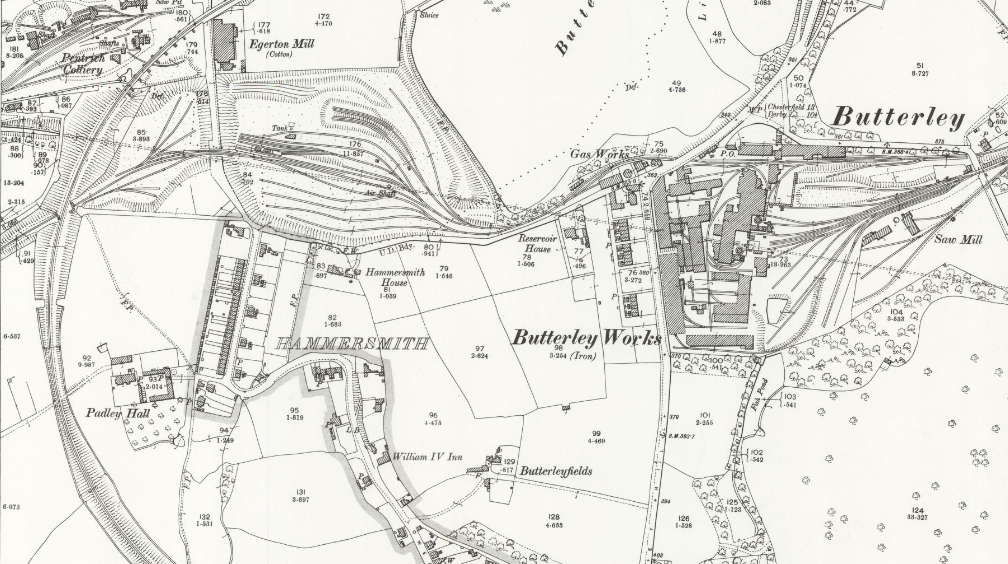
You can see from the 1898 map that it was conveniently situated for the Butterley Works.
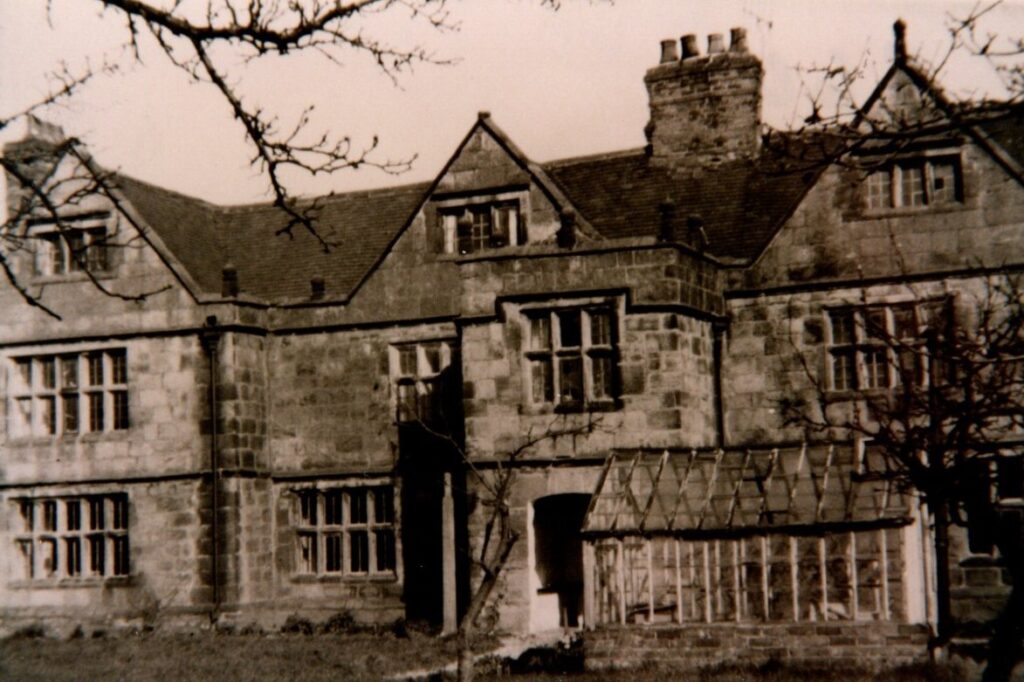
These are some early pictures of the hall : the greenhouse at the front shows that it was rented as a useful farmer’s home rather than a grand seat.
Throughout this period it was tenanted by, among others, Matthew Stone (mentioned in 1870), William Caudwell (1878), James Slater (1880), George Young (1890), Benjamin Clarke (1894), John Ogle (1908-1913), George Henry Lane and his son George William Lane (1913-1958).
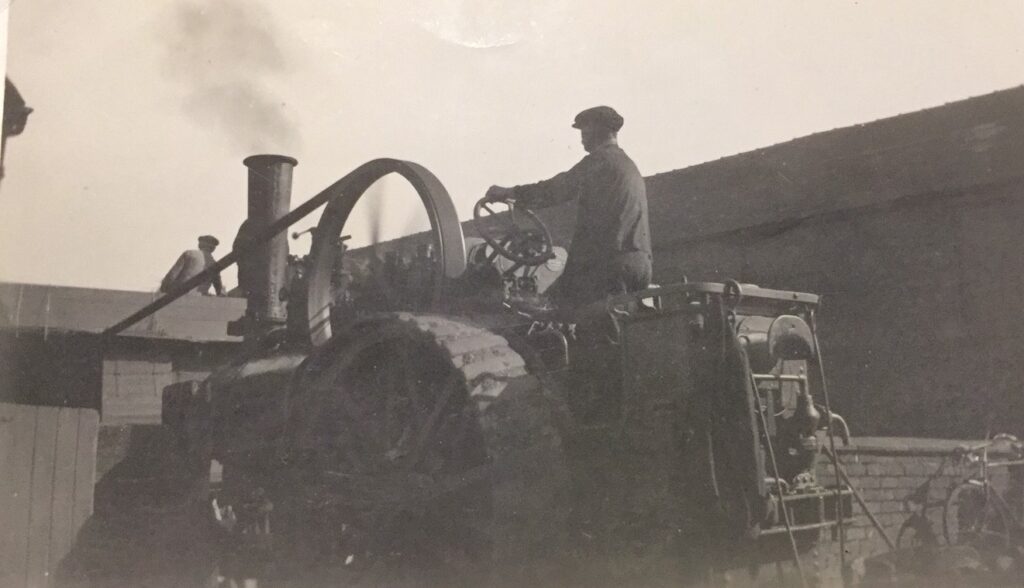
In 1939 George’s son Herbert Lane collected a traction engine from Skee’s Yard on Argyll Road. It was a showman’s engine, probably owned by the Oadleys, but it was adapted for use on the farm, as shown in this picture of the stackyard. The man is believed to be Fred or Sam Mitchell.
The Butterley Company retained the Hall until 1976, selling it to the Bloore family who were reported as being convinced that the Hall was haunted, both by a figure resembling Robert Fearne, and by a woman in white, whose appearance was claimed to presage good news.
This is the Hall outbuildings in the early 1970s.
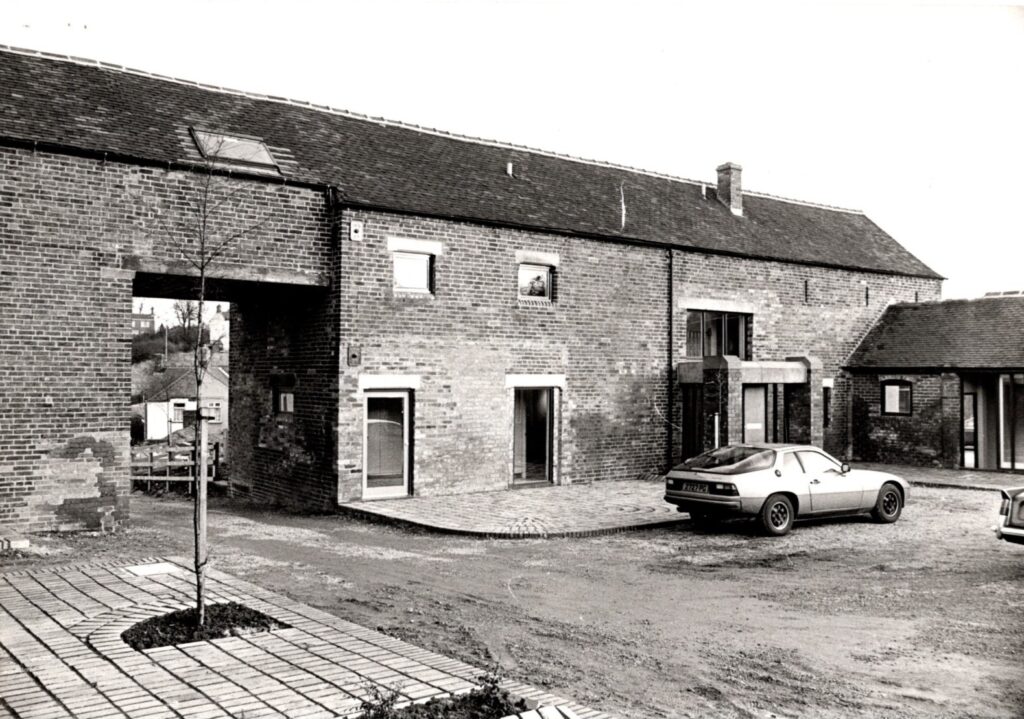
They seem to have left in August 1978. Mick Robshaw, Mr Bloore’s nephew, reports that it was because the new Ripley by-pass cut the farm’s land in two. This would explain why the Hall passed into the hands of the Department of the Environment who put it up for sale, and in 1979 the farm buildings were converted into homes. It was resold in 2020 for £820,000