
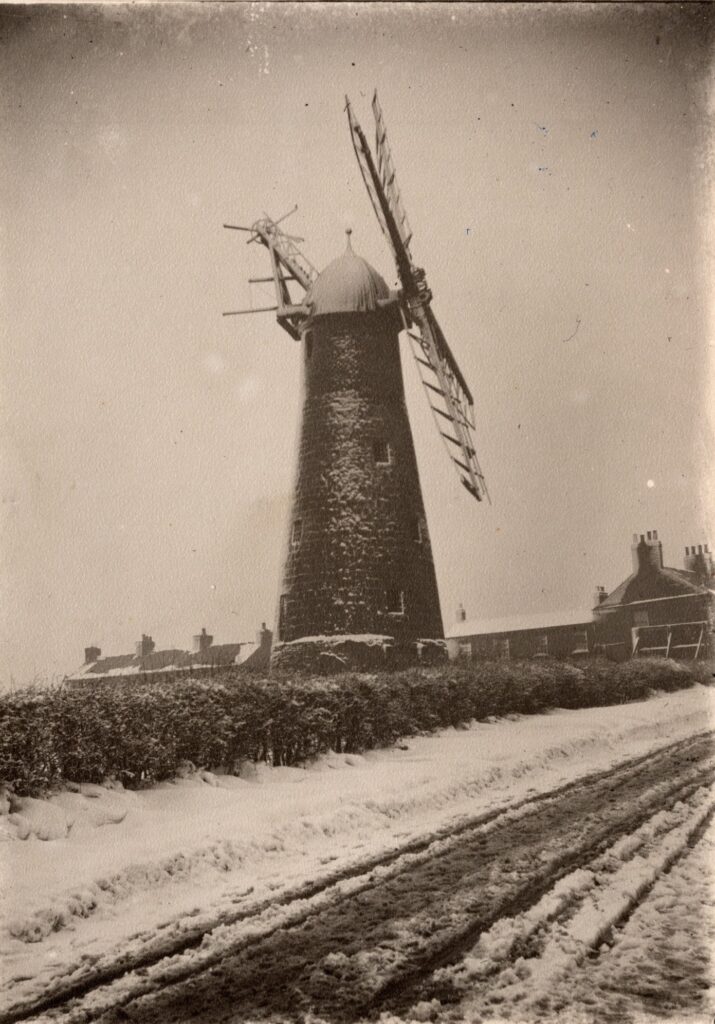
The Stanley family were millers and owners of Ripley’s windmill and steam mill, both on Steam Mill Lane.
In 1810 Mary Stanley, daughter of the original builder of the windmill, married Robert Whysall. By 1831, her brother Anthony was the miller, and Whysall was a maltster. He bought 25 quarters of barley from Messrs Smith and Jackson, corn factors., and paid £50 for it.
Here was the problem: he paid £13 in cash, and £37 in the form of a promissory note apparently signed by his brother-in-law Anthony Stanley. The note bounced, and Whysall was arrested.
When questioned, Stanley denied signing the note, or giving permission for Whysall to sign on his behalf. He said that they had argued recently, and added that he had in the past given money – £500 or so (£35000 in today’s money) – to Whysall for the sake of his sister and their large family.
Whysall was found guilty of forgery, the penalty for which, in 1832, was death. However, in response to pleas from various people including his brother-in-law, the sentence was commuted to transportation for life.

Records enable us to follow Whysall’s progress. He was at first imprisoned in Derby jail, then transferred to the prison hulk “Justicia” at Woolwich, until he made the journey to Australia aboard the “Parmelia”. Almost immediately on arrival in the colony, he was given a ticket-of-leave, a sort of parole issued to prisoners not regarded as dangerous, which allowed him to work for himself. Sixteen years later he was granted a full pardon. He stayed in Australia, dying in Sydney in 1878, at the age of 86.
Back in Ripley, one of his sons, also Robert, continued his trade as maltster, and also had a brick works and steam mill in Malthouse Yard.